

Why Nike's World Cup Ad Has Got It Right
Let's start with the obvious. Adidas went first, and they went hard — a cinematic World Cup film headlined by Timothée Chalamet and Bad Bunny, packed with the biggest names in football, fashion and culture - drawing on the nostalgia of World Cup campaigns gone by.
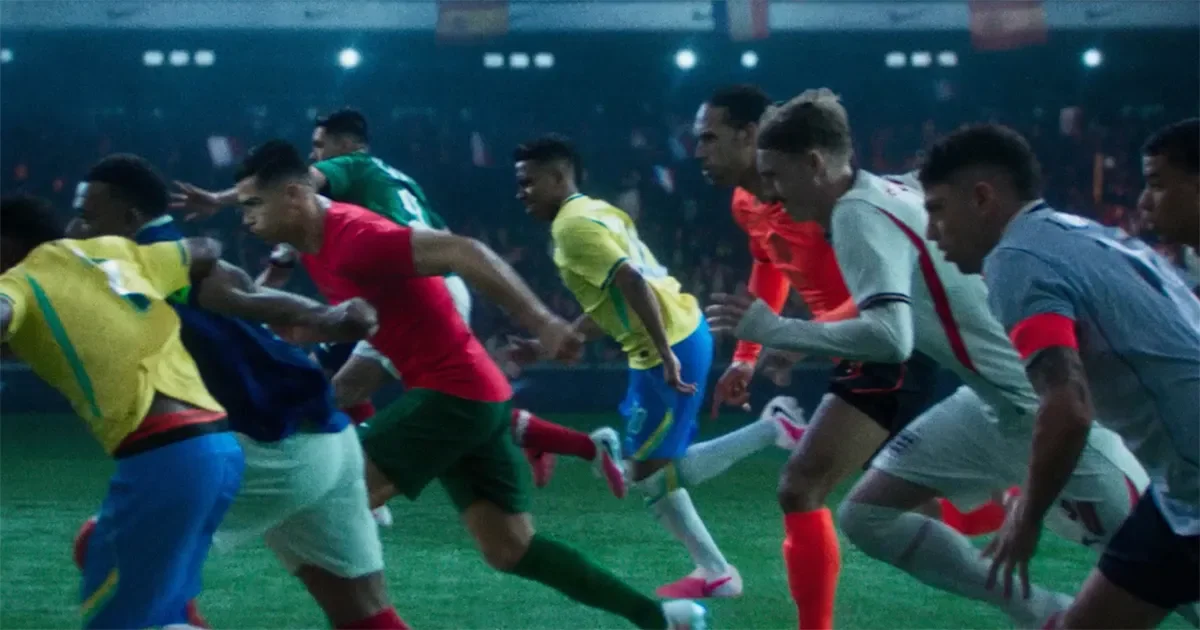
Then Nike dropped Rip the Script. And the conversation shifted.
Something's changing
There's a mood right now that anyone making creative work should probably pay attention to. Audiences are increasingly uncomfortable with anything that feels too produced, too controlled. And AI has made that discomfort sharper.
Adidas got called out for using an AI-generated David Beckham. In the States, ESPN had to explain an altered image during a live World Cup final. American college students have been booing speakers just for mentioning AI. The backlash isn't really about the technology — it's about trust. When people can't tell what's real, they get uneasy.
We've also known since TikTok took over that audiences are pulling towards raw over polished. Shoot it on iPhone. More behind-the-scenes, more chaos. The rough edges aren't a flaw anymore — in a lot of contexts, they're the point.
What Nike did
Nike's answer was to make the behind-the-scenes the ad. Same roster of talent across football, music and culture — the flex was still there — but less controlled, more human.
And they held the nerve all the way through. Right up to the final moment, when it looks like the campaign might fold into the familiar underdog trope, they resist. Erling Haaland comes into frame over the kid's head. Script ripped.
Behind-the-scenes content is, in a real sense, anti-AI. It's imperfect and unscripted — everything AI-generated content can't be. The brands that figure out how to feel genuinely real, rather than just performing realness, are going to be in a much stronger position.
Nike, with this one, look like they've worked it out.
Watch the full video here >
Get in touch to discuss your next project. Email sam@samuel-harrison.co.uk
